Personalized Children's Books With Photos: How They Work and What to Look For
By Gary · 9 September 2026
Quick answer: A personalized children's book with photos is a printed storybook in which your child (and often your whole family) appears as a character. There are three ways companies do this: pasting your actual photo onto the page, swapping in a pre-drawn avatar that roughly matches your child, or generating original illustrations from your photo so the character looks like your kid in the book's art style. The third approach is the newest, and it's the one we built Little Legends around. Below is how each works, what to check before you order, and what the research says about why kids respond to stories about themselves.
The three types of personalized photo books
Most of the confusion parents run into comes from the fact that "personalized book with photo" describes three very different products.
1. Photo-insert books. Your uploaded photo is placed into a frame or cutout on the page, next to illustrated scenes. These are the oldest style and the cheapest to produce. The upside is that it's unmistakably your child. The downside is that a photo dropped onto a drawing never quite belongs to the drawing, and the story itself is usually generic: the same plot for every family, with a name swapped in.
2. Avatar books. You pick from a menu (skin tone, hair style, glasses, and so on) to build a cartoon that approximates your child. Wonderbly and Hooray Heroes popularized this format, and it works well for the classic "your name is in the story" gift. Your photo isn't actually used; it's a reference for you while you click through the options. Siblings and parents usually get the same treatment, one avatar at a time.
3. Illustrated-from-photo books. You upload real photos, and the illustrations are generated so the characters share your child's actual features — the curls, the gap-tooth grin, the family dog — rendered in a consistent storybook style across every page. This is what people mean when they search for an "AI personalized children's book." The character is drawn, not photographed, but it's drawn from your kid rather than from a menu. It also means the story can be original instead of one of a dozen templates.
At Little Legends we do the third type: you upload a family photo, we turn the people in it into story characters, and we print and ship the finished book. That's the lens for the rest of this guide, but the checklist below applies no matter which type you're considering.
What to look for before you order
Does the character actually look like your child? This is the whole point, and it's where most products quietly fall short. With avatar books, ask yourself whether the menu can represent your kid. With illustrated-from-photo books, look for a preview step where you see the character before the book is printed and can regenerate or adjust if it's off. Any company confident in its likeness will show you first.
Can the whole family be in it? A lot of "personalized" books are really single-child books. If you want a story where Grandma, a new baby brother, or the dog show up as characters, check that the product supports multiple characters from one photo, not just one hero.
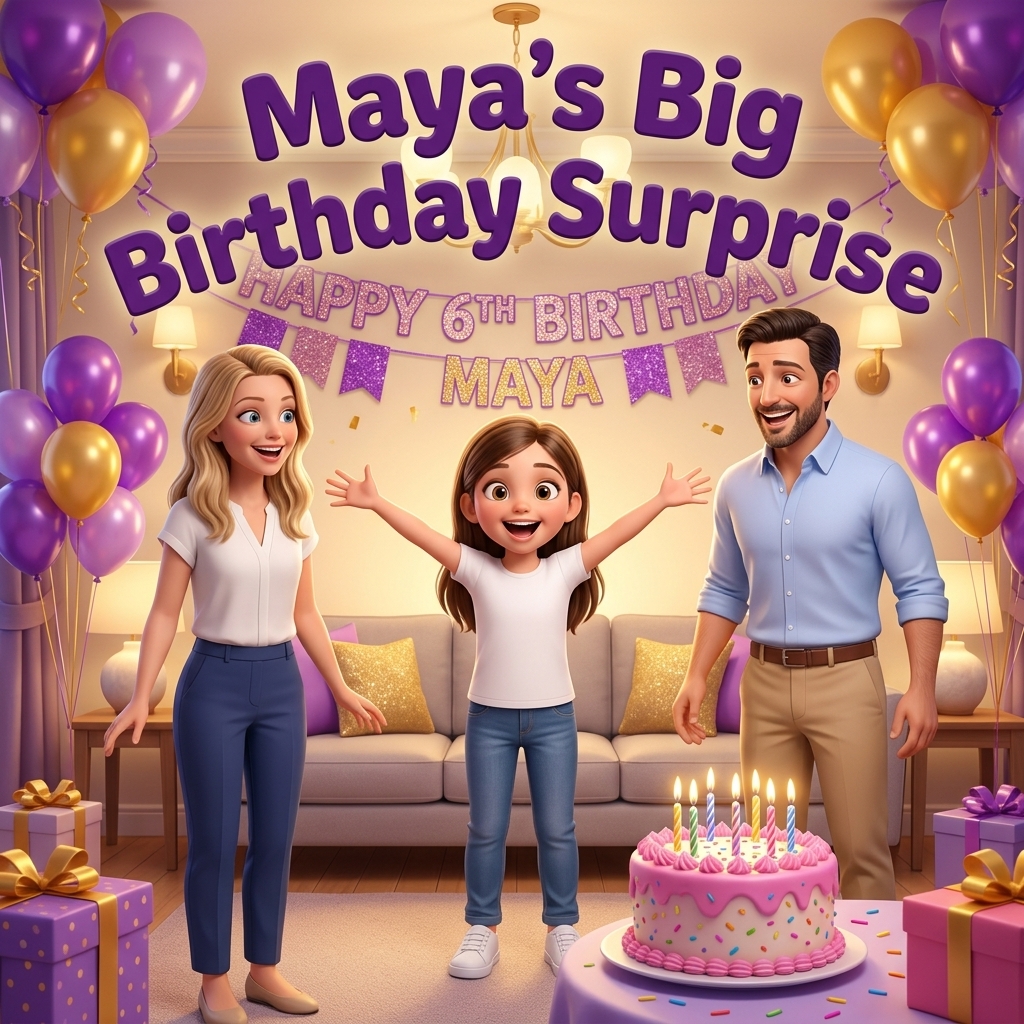
Is the story personalized, or just the name? There's a real difference between a book that says "Maya went to the moon" and a book about Maya's actual fear of the dark, her first day at a new school, or the trip you took last summer. Look for a story library organized around real situations (we group ours into collections like Big Feelings), plus the option to write your own prompt so the plot is genuinely about your kid's life.
Can you edit it? You're going to want to fix a name spelling, swap a line, or pick a different image for page six. Editing text and images before print should be standard, not a customer-support ticket.
Age fit. Board-book toddlers and picture-book six-year-olds need different word counts, sentence lengths, and page counts. Check the stated age range; ours is made for ages 0–7, and the stories scale with that.
Print quality and format. Ask about paper weight, hardcover vs. softcover, and page count. A personalized book is usually a keepsake, so it's worth knowing whether it's built to survive 200 bedtime readings.
Turnaround. Illustrated-from-photo books take longer than "name swap" books because the art is made for you. Check the production plus shipping window before a birthday or holiday deadline.
Why kids respond differently to a book about themselves
This isn't just a gift gimmick. Personalized reading has been studied for over a decade, mostly by Natalia Kucirkova and colleagues at the Open University and UCL.
In a 2014 study of 18 preschoolers (average age 3 years 10 months), children were read a picture book with both personalized and non-personalized sections, each containing unfamiliar target words. Across repeated readings, the kids showed significantly better knowledge of the words that appeared in the personalized sections than the words in the non-personalized ones. In other words, vocabulary sticks better when the story is about them.
Earlier work with toddlers found that personalized books changed the shape of the reading session itself: children produced more spontaneous, self-referential talk, and parents who connected the story back to the child's real life saw higher comprehension. Kucirkova describes personalized reading as fostering "a less hierarchical parent-child interaction," meaning the book becomes a conversation starter rather than a performance.
Two honest caveats from that same research. First, the benefit depends on the parent staying in the loop; the concern researchers raise about "outsourcing" the parent to technology is a fair one, and the fix is simply to read together. Second, personalization is not a substitute for a good story. A book that looks like your child but has nothing to say gets abandoned like any other book.
That second point is why we spend more effort on the story pipeline than the picture pipeline. A face that looks right gets a gasp on the first read. A story that names something the child is actually going through gets requested every night.
How Little Legends works (in three steps)
Create characters. Upload a family photo, or describe the characters. We turn each person into a consistent illustrated character.
Customize the story. Choose from our story library, including collections built around real situations (starting school, a new sibling, big feelings), or write your own prompt. Edit the text and images until it's right.
Get your book. We print it and deliver it to your door.
Your family. Your story. Their moment to shine. → Create your book
Frequently asked questions
What is a personalized children's book with photos? A storybook where your child (and often other family members) appear as characters, based on photos you provide. Depending on the company, your photo is either printed directly on the page, used as a reference for a menu-built avatar, or used to generate original illustrations that resemble your child.
Is an AI personalized children's book the same as a photo book? No. A photo book prints your actual photographs. An AI personalized book uses your photos to create hand-drawn-style illustrations of your child, so every page is artwork rather than a photo collage.
What age is best for personalized books? Research on personalized reading has focused on toddlers and preschoolers (roughly ages 2–5), where vocabulary and engagement effects have been measured, but the format works from board-book age through early readers. Little Legends books are made for ages 0–7.
Can more than one child or family member be in the book? It depends on the product. Photo-insert and avatar books are often one-child-per-book. Little Legends builds characters from a family photo, so parents, siblings, grandparents, and pets can all appear.
Do personalized books actually help kids read? A 2014 experimental study found preschoolers learned significantly more new words from personalized sections of a book than from non-personalized sections. Earlier studies found more child talk and more engaged parent–child interaction during personalized reading. The effect depends on reading together, not handing the child a screen.
How long does a personalized photo book take to make? Books with generated illustrations take longer than name-swap books because the artwork is created for your child. Order ahead of birthdays and holidays.
Can I preview and edit the book before it's printed? You should be able to, and with Little Legends you can: text and images are editable before you approve the book for print.
Sources
- Kucirkova, N., Messer, D., & Sheehy, K. (2014). Reading personalized books with preschool children enhances their word acquisition. First Language. https://journals.sagepub.com/doi/10.1177/0142723714534221
- Kucirkova, N., Messer, D., & Whitelock, D. (2013). Parents reading with their toddlers: The role of personalization in book engagement. Journal of Early Childhood Literacy. https://journals.sagepub.com/doi/10.1177/1468798412438068
- MIT Open Learning. Kucirkova and Personalized Technology for Children: a Summary. https://openlearning.mit.edu/news-events/blog/kucirkova-and-personalized-technology-children-summary